
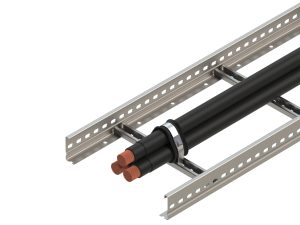
Extra Heavy-Duty Cable Ladder
列表描述
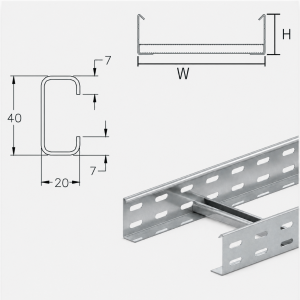
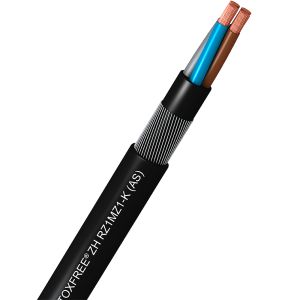
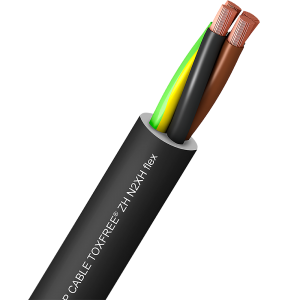

Resists crushing & impact damage

Reinforced Mechanical Protection

Built for Versatility and Durability in Fixed Armoured Applications

Quality You Can Trust – From an Industry Leader

Dedicated Technical Support Whenever You Need It

Excellence in Service, Mastery in Logistics.
This is a classic case of "Aesthetics vs. Atomic Stability." The difference lies in the thermodynamics of the coating process and the internal stress of the zinc layers.
1. Thermal Stress Relief (The Secret of HDG)
The HDG Process: Wire mesh trays are submerged in molten zinc at approximately 450°C (842°F). This extreme heat acts as a continuous annealing process, which relaxes the metal’s atomic structure. Because the zinc settles in a relaxed, low-stress state, there is no "internal pressure" to drive the growth of zinc whiskers.
The EZ Process: Electro-galvanizing occurs at room temperature. Zinc atoms are forcibly "stacked" onto the steel via an electric current. This creates high compressive stress within the coating. Over time, to relieve this stress, the zinc atoms are "squeezed" out, forming microscopic, needle-like whiskers.
2. Metallurgical Bond vs. Mechanical Skin
HDG (Alloy Layers): HDG is not just a surface coating; it is a chemical reaction. It forms several Iron-Zinc alloy layers (such as the Zeta and Delta layers). These intermetallic layers are hard and stable, acting as a structural anchor that prevents the migration of zinc atoms.
EZ (Pure Zinc): Electro-plating creates a thin layer of pure zinc that simply "clings" to the surface. Without the alloyed transition layers, the zinc atoms are more mobile and prone to whisker eruption.
3. Why HDG Looks "Rough" (Dross and Pustules)
The visual "imperfections" of Hot-Dip Galvanizing—such as tiny bumps (zinc dross), dull grey patches, or uneven thickness—are actually by-products of its superior protective strength:
Zinc Dross: During the 450℃ dip, small iron particles react with the zinc to form crystals. These provide immense corrosion resistance but can create a gritty texture.
Withdrawal Viscosity: As the tray is lifted from the molten bath, the zinc is a thick liquid. Gravity and surface tension cause it to "run" and pool before it solidifies, leading to the characteristic rugged finish.
Choose Electro-Galvanized (EZ): Only when aesthetics are the priority and the environment is a non-critical dry indoor space (NOT for data centers).
Choose Hot-Dip Galvanized (HDG): When you need maximum durability and zero whisker risk for industrial or outdoor infrastructure.
The Verdict: Do not mistake surface roughness for low quality. In the world of cable management, the "messy" finish of HDG is the mark of a stress-relieved, metallurgically bonded, and "Whisker-Safe" product.
The Mechanism: Utilizes spring-steel clips or pre-installed snap-on mechanisms that "click" together.
Advantages:
Labor Efficiency: Reduces installation time by up to 50% compared to manual bolting.
Tool-Free: Ideal for overhead installations or confined spaces where handling small nuts and bolts is difficult.
Uniformity: Provides a consistent tension across all joints.
Best For: Data centers, telecommunication hubs, and commercial projects with tight deadlines.
The Mechanism: Uses a specialized M6 Carriage Bolt (square neck) and a flanged nut combined with a small and large splice washer.
Advantages:
Superior Security: The square neck of the carriage bolt locks into the splice washer, allowing the installer to tighten the nut from one side without the bolt spinning.
Smooth Interior: The rounded head of the carriage bolt faces the inside of the tray, ensuring a snag-free surface that won't damage cable jackets during pulling.
High Load Rating: Offers the highest mechanical resistance against vibration and heavy cable loads.
Best For: Heavy industrial plants, oil & gas, and infrastructure where long-term structural reliability is paramount.
The Mechanism: A U-shaped or "wrap-around" plate that clamps the side wires of two adjacent trays, usually secured by a single central bolt.
Advantages:
Versatility: Excellent for joining trays that have been cut on-site to create custom angles or offsets.
Reinforced Sidewalls: Adds extra rigidity to the side rail of the tray, which is the most critical area for preventing sag.
Grounding Surface: Provides a large metal-to-metal contact area, which is beneficial for electrical bonding.
Best For: Complex site layouts requiring many on-site adjustments and modifications.