

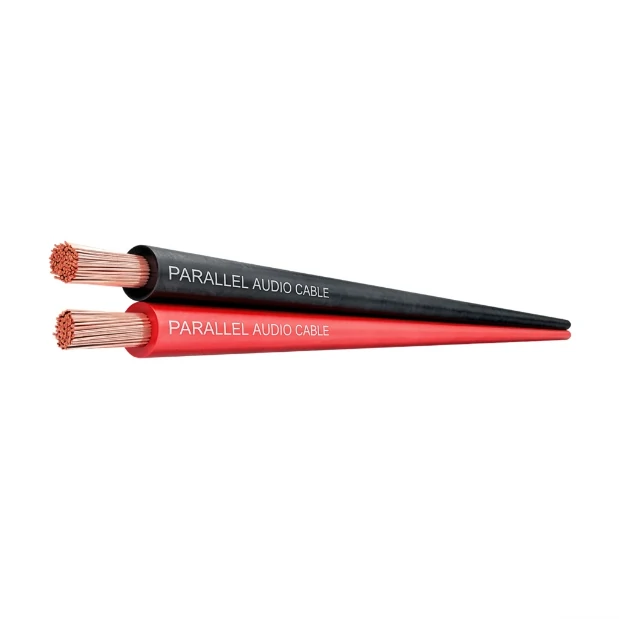
PARALLEL AUDIO CABLE
Cable specially indicated in domestic installations



GENERAL APPLICATIONS
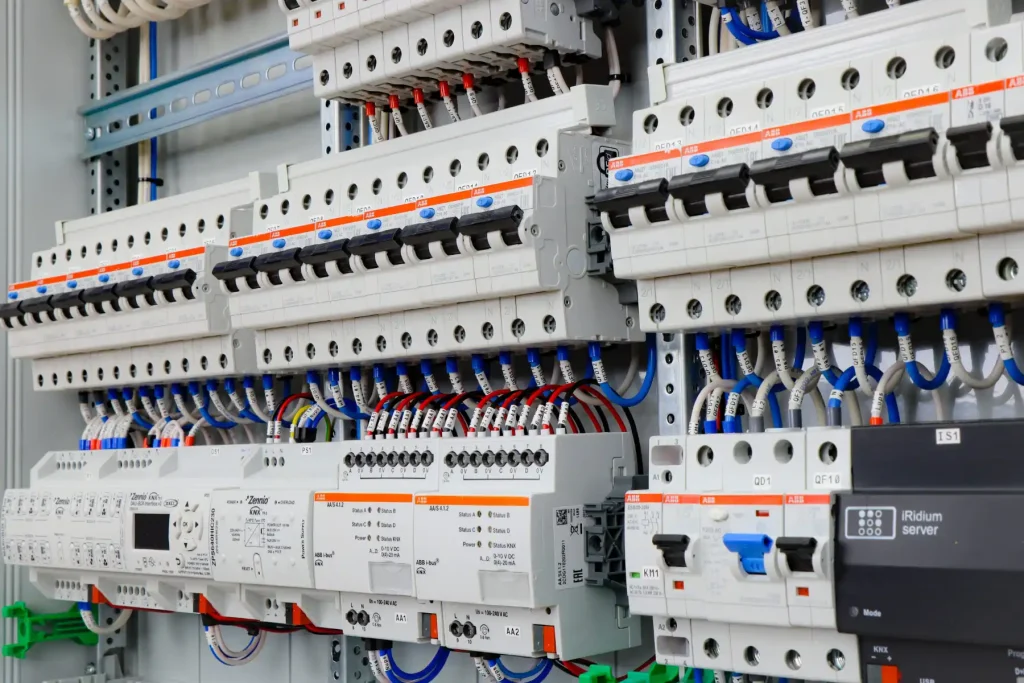
PARALLEL AUDIO cable provides a cost-effective and mechanically robust solution for low-frequency signal transmission. Its precisely controlled impedance and low capacitance ensure minimal signal loss and high-fidelity audio reproduction across the entire frequency spectrum for professional music equipment speakers.
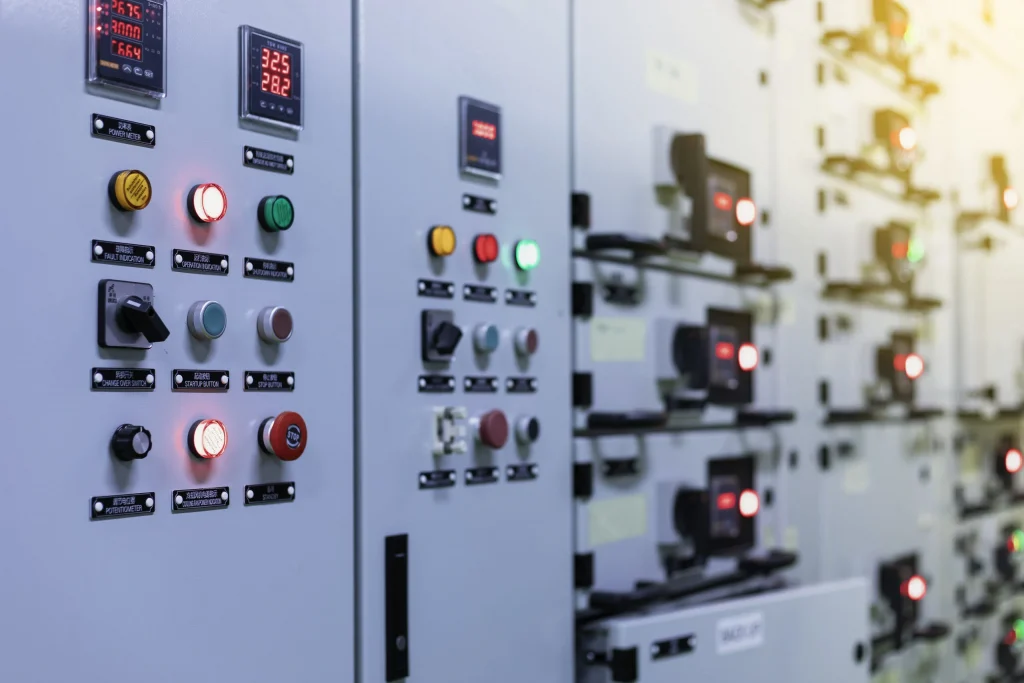
PARALLEL AUDIO cable ensure reliable, long-term performance and enhanced safety within the structured wiring of fixed installations.

PARALLEL AUDIO cable provides a cost-effective and mechanically robust solution for low-frequency signal transmission in small offices or domestic installations, where its simple construction is perfectly adequate for connecting speakers over short distances.
PARALLEL AUDIO cable provides a cost-effective and mechanically robust solution for low-frequency signal transmission. Its precisely controlled impedance and low capacitance ensure minimal signal loss and high-fidelity audio reproduction across the entire frequency spectrum for professional music equipment speakers.
PARALLEL AUDIO cable ensure reliable, long-term performance and enhanced safety within the structured wiring of fixed installations.
PARALLEL AUDIO cable provides a cost-effective and mechanically robust solution for low-frequency signal transmission in small offices or domestic installations, where its simple construction is perfectly adequate for connecting speakers over short distances.
Technical specifications
Application
Cable specially indicated in domestic installations for connecting music equipment speakers and for broadcasting music signals throughout the home.
Construction
Conductor
Copper, class 5 (flexible).
Insulation
PVC (flexible).
The standard identification of insulated conductors is the following:
Bicolour audio cable: Red + Black
OFC audio cable: Transparent + Transparent
Standards / Compliance
- ACCORDING TO: UNE 211030.
Standards and approvals
- AENOR
- RoHS
Disclaimer
The information displayed on this website is provided for reference purposes only and is not legally binding. Specifications, values, and technical data may be subject to change without notice. To obtain verified and up-to-date technical data for a specific cable, please download Top Cable’s official Technical Specification in PDF format. The PDF document constitutes the sole authoritative source of product data.
Characteristics

These cables have no assigned voltage and can’t be used inelectric power transport circuits

Maximum service temperature: 70ºC.Maximum short-circuittemperature: 160ºC (max. 5 s).Minimum service temperature -15º (static with protection).

Flame non-propagation according to EN 60332-1 and IEC 60332-1.

Minimum bending radius: x5 cable diameter.

Speaker connection.
Why choose our PARALLEL AUDIO CABLE
-

As cable manufacturers, we ensure cost-effective premium quality and lasting performance.
-
Our in-house labs guarantee rigorous cable quality, reliability, and standards compliance.
-

Global cable delivery solutions—expert logistics for seamless supply.
-
Full cable stock, ready for fast delivery- shortest lead times.
-
EPD-certified cables: Sustainable manufacturing for your Scope 3 success.
-
Expert, friendly and professional sales team offering a fast & efficient customer service. Global customers are welcome!
PARALLEL AUDIO CABLE FAQ FAQs
Click a question to reveal the answer.
A parallel audio cable features conductors that run side‑by‑side in a uniform geometric plane, rather than being twisted together. This construction creates a controlled, low‑inductance transmission path with consistent impedance along the entire length. Unlike twisted pair designs, which can introduce phase shifts and higher inductance at audio frequencies, the parallel lay preserves transient detail and high‑frequency phase coherence. The result is more accurate sound reproduction, particularly critical when connecting power amplifiers to professional loudspeaker arrays over long distances in touring, installation, and studio environments.
Oxygen‑free copper conductors, specified in accordance with IEC 60228 for conductor construction, contain minimal oxygen and other impurities that could otherwise form oxides at grain boundaries. This high‑purity material ensures maximum electrical conductivity and reduces signal loss due to resistance. In professional audio applications, even subtle losses can degrade transient response and high‑frequency clarity. By using OFC, Chinne Electric’s parallel audio cable maintains the integrity of the original audio signal from amplifier to speaker, preserving the nuance and dynamics that touring rigs and fixed installations demand.
The precisely spaced parallel conductor geometry ensures that the magnetic fields surrounding each conductor interact in a controlled, symmetrical manner, yielding low loop inductance and uniform characteristic impedance. This reduces phase shift across the audio spectrum, preserving correct timing between low and high frequencies. Additionally, the tight parallel lay limits electromagnetic coupling between adjacent conductors, inherently suppressing crosstalk and common‑mode noise pickup. For installations where cables may run tens of meters, this design ensures that the loudspeaker receives a signal that is a faithful copy of the amplifier’s output, without the smearing effects typically introduced by higher‑inductance cable configurations.
The cable is tested to IEC 60332‑1‑2 for flame retardancy, ensuring it self‑extinguishes and limits vertical flame propagation in the event of fire—an essential requirement for permanent venues and public spaces. Conductor materials comply with IEC 60228, guaranteeing consistent electrical performance. The jacket and insulation are formulated to meet RoHS and REACH regulations, confirming the absence of restricted hazardous substances and providing full chemical transparency. These combined certifications give audio consultants, system integrators, and touring professionals confidence that the cable is safe, reliable, and compliant with global touring and building codes.
This cable excels in any scenario where a power amplifier and passive loudspeaker are separated by significant distances and signal integrity is paramount. Typical deployments include concert hall and theatre fixed installations, line‑array systems in arenas, studio monitor feeds from a control room to live rooms, and touring PA racks that must deliver consistent performance night after night. The cable’s low‑inductance parallel geometry ensures that even the most demanding program material—with sharp transients and extended high‑frequency content—reaches the speaker without distortion, making it ideal for reference playback, critical listening, and high‑definition sound reinforcement.