


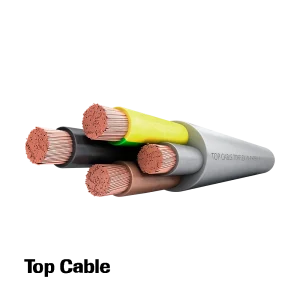
LSZH CABLES
A trusted factory-direct supplier for all your Low Smoke Halogen Free (LSZH) fire retardant cable needs
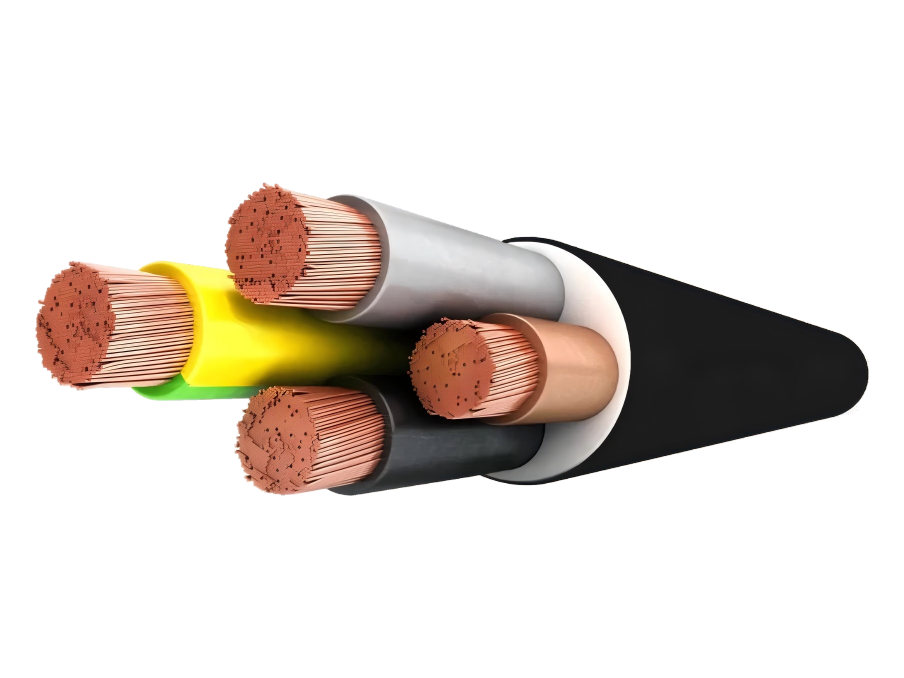
Benefits of LSZH fire retardant cables
CHINNE LSZH is the best cable choice for enhanced fire safety in public places like hospitals, schools, and offices. They produce less smoke and no toxic halogen gases when burned, enhancing visibility and reducing the risk of toxic inhalation, facilitating the evacuation of people in the event of a fire.
Typical applications of LSZH CABLES
Select...

LSZH cables for public buildings
Mandatory in many public buildings, LSZH cables comply with stringent local, European (EN 50575, CPR), and international (IEC 60332) fire safety standards, ensuring minimal smoke and zero toxic halogens during a fire. They protect both people and critical equipment while meeting mandatory regulations for schools, hospitals, and high-risk public infrastructure.
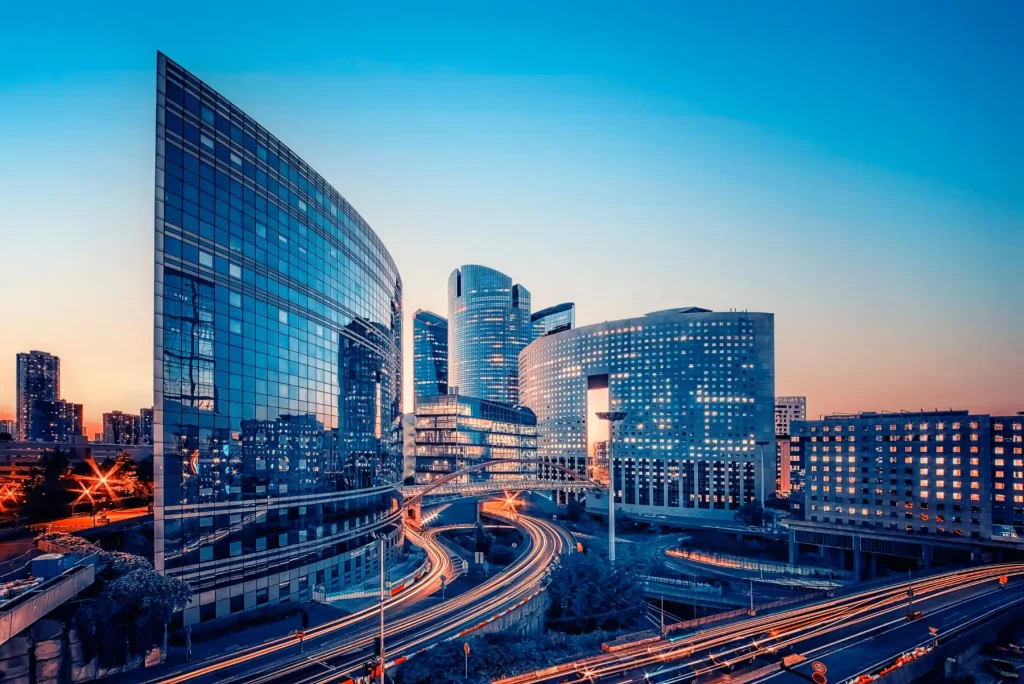
LSZH cables for high rise buildings
Mandatory in many public buildings, LSZH cables meet strict local, European (EN 50575 CPR Euroclass) and international (IEC 60332) fire standards for high-rises, including French NF C 15-100. Their fire-retardant properties, low smoke emission and halogen-free composition enhance evacuation safety while protecting critical building systems in high-rise fire emergencies.

LSZH cables for hospitals, schools, and similar
Mandatory in many public buildings, LSZH cables comply with European CPR (EN 50575 Euroclass) and IEC 60332 standards. Their fire-retardant properties, low smoke emission and zero halogen toxicity ensure safer evacuations while protecting sensitive equipment and vulnerable occupants in healthcare and education facilities.
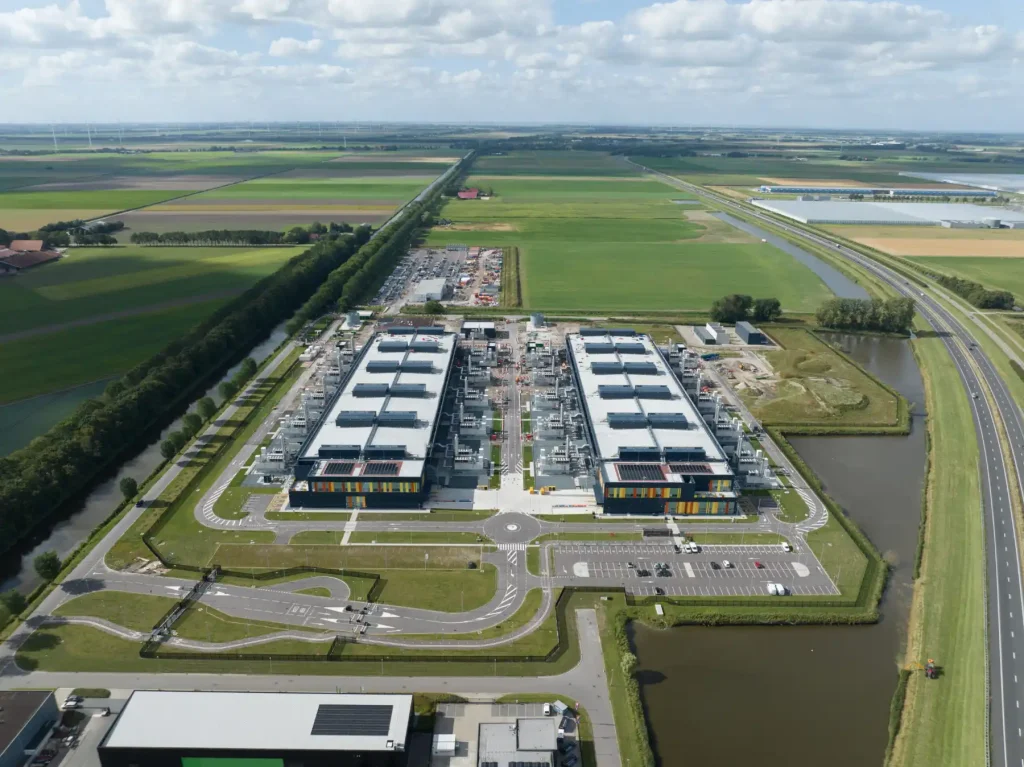
LSZH cables for Data Centres
LSZH cables are almost compulsory in worldwide Data Centre infrasctructure due to their zero downtime tolerance during a possible fire. Meeting the stringent CPR (EN 50575 Euroclass) and IEC 60332 standards, they have fire-retardant properties, low smoke emission and zero halogen toxicity. This prevents catastrophic damage to equipment and guarantees the continuity of infrastructure operations while ensuring the safety of personnel during critical fire incidents.
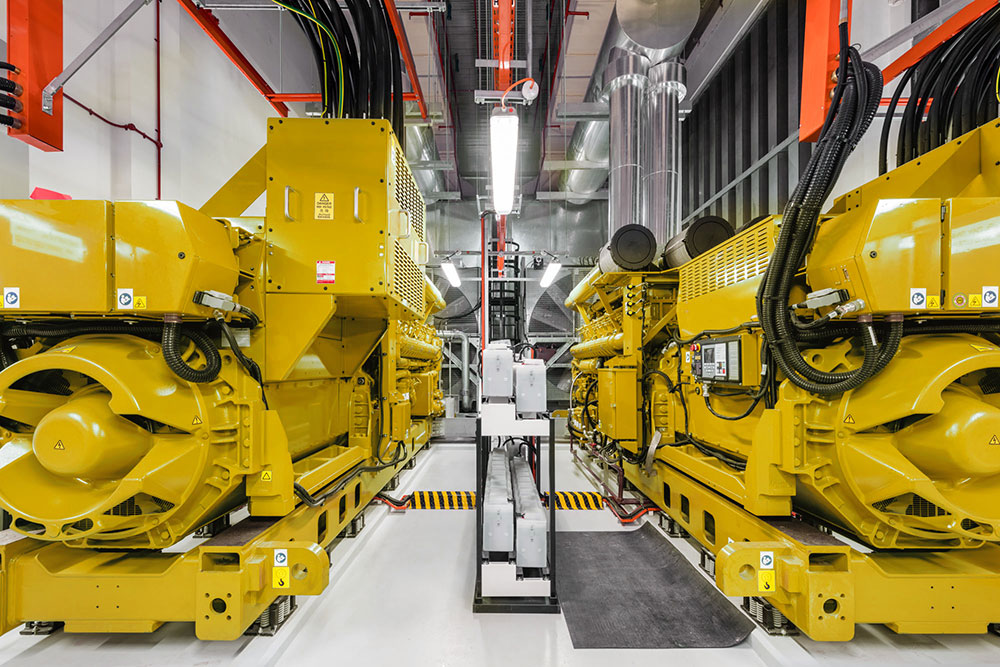
LSZH cables for Industrial facilities
In industrial environments where fire safety is critical, LSZH cables meet stringent IEC 60332 and EN 50575 standards. Their fire-retardant, low-smoke and halogen-free properties minimize production downtime while protecting both personnel and sensitive industrial equipment from toxic hazards during a possible fire event.
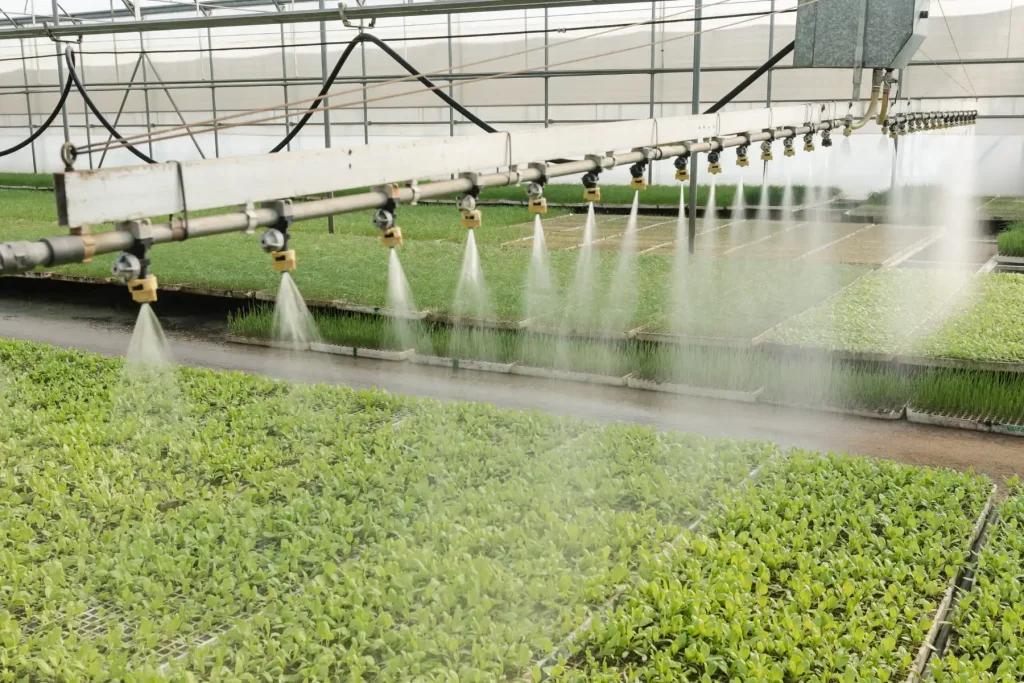
LSZH cables for agricultural establishments
In agricultural environments with flammable materials, LSZH fire safety cables comply with IEC 60332 and EN 50575 standards. Their fire-retardant, low-smoke and halogen-free properties protect both livestock and people, and equipment, while minimizing fire risks in barns, storage facilities and processing areas.

LSZH cables for construction
In construction environments, LSZH fire retardant cables meet IEC 60332 and EN 50575 safety standards. Their low-smoke zero halogen properties prevent toxic hazards, protecting workers while minimizing fire risks in temporary installations and building sites.
Public buildings
Mandatory in many public buildings, LSZH cables comply with stringent local, European (EN 50575, CPR), and international (IEC 60332) fire safety standards, ensuring minimal smoke and zero toxic halogens during a fire. They protect both people and critical equipment while meeting mandatory regulations for schools, hospitals, and high-risk public infrastructure.
High rise buildings
Mandatory in many public buildings, LSZH cables meet strict local, European (EN 50575 CPR Euroclass) and international (IEC 60332) fire standards for high-rises, including French NF C 15-100. Their fire-retardant properties, low smoke emission and halogen-free composition enhance evacuation safety while protecting critical building systems in high-rise fire emergencies.
Hospitals, schools, and similar
Mandatory in many public buildings, LSZH cables comply with European CPR (EN 50575 Euroclass) and IEC 60332 standards. Their fire-retardant properties, low smoke emission and zero halogen toxicity ensure safer evacuations while protecting sensitive equipment and vulnerable occupants in healthcare and education facilities.
Data Centres
LSZH cables are almost compulsory in worldwide Data Centre infrasctructure due to their zero downtime tolerance during a possible fire. Meeting the stringent CPR (EN 50575 Euroclass) and IEC 60332 standards, they have fire-retardant properties, low smoke emission and zero halogen toxicity. This prevents catastrophic damage to equipment and guarantees the continuity of infrastructure operations while ensuring the safety of personnel during critical fire incidents.
Industrial facilities
In industrial environments where fire safety is critical, LSZH cables meet stringent IEC 60332 and EN 50575 standards. Their fire-retardant, low-smoke and halogen-free properties minimize production downtime while protecting both personnel and sensitive industrial equipment from toxic hazards during a possible fire event.
Agricultural establishments
In agricultural environments with flammable materials, LSZH fire safety cables comply with IEC 60332 and EN 50575 standards. Their fire-retardant, low-smoke and halogen-free properties protect both livestock and people, and equipment, while minimizing fire risks in barns, storage facilities and processing areas.
Construction
In construction environments, LSZH fire retardant cables meet IEC 60332 and EN 50575 safety standards. Their low-smoke zero halogen properties prevent toxic hazards, protecting workers while minimizing fire risks in temporary installations and building sites.
A complete solution from Top Cable
-
High quality Cable manufacturer
Cable manufacturer Top Cable is one of Europe's leading cable manufacturers which excels in providing best-in-class service.
-
Large
cable stockLarge cable stock Our large cable stock is always ready to be shipped around the globe. -
Quality and
CertificatesQuality/Certificates In our state-of-the-art laboratories we subject our cables to stringent product testing and quality controls. -
Best-in-class-service
Best-in-class-service A friendly and eficcient sales team and our excellent logistics will satisfy your cable requirements.
Filter cable by:
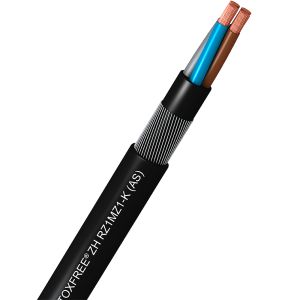
TOXFREE® LSZH RZ1MZ1-K
Enhanced Mechanical Protection / Enhanced Fire Safety | CPR Cca B2ca LSZH / For hazardous areas with explosive gas atmospheres (ATEX)
TOXFREE® LSZH RZ1 AL
Aluminium cable / Enhanced Fire Safety LSZH / CPR / Lighter Weight and Potentially Lower Cost (compared to Copper)
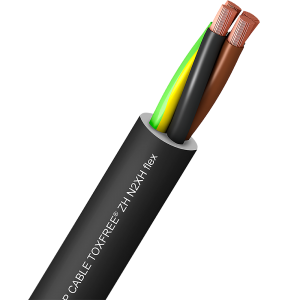
TOXFREE® LSZH N2XH flex
Enhanced Fire Safety | CPR Cca B2ca LSZH / Enhanced flexibility and ease of Installation / Versatile applications for fixed LSZH power installations
Why choose CHINNE LSZH cables?
-

Enhanced Fire Safety
-

Enhanced flexibility and ease of Installation
-

LSZH power installations
-

Trusted Quality: cables from a recognized manufacturer
-

Technical expert support and after-sales service
-

Premium service and global logistics
LSZH (Low Smoke Halogen Free) are electric cables for public places such as: hospitals, schools, museums, airports, bus terminals, shopping malls, offices, laboratories, etc. In the event of fire, these cables do not spread fire nor emit toxic or corrosives gases, preventing any possible harm to people or electronic equipment. In Europe, fire performance is regulated by the European CPR (Construction Products Regulation)
In the event of a fire, LSZH cables do not spread flames and therefore allow for successful evacuations, not emitting smoke or releasing toxic gasses. This facilitates the evacuation of people and the work of rescue personnel. Therefore Low smoke halogen free LSZH cables are highly recommended for installation in all premises open to the public such as: airports, arenas, concert halls, department stores, offices, hotels.
The European Construction Product Regulation (CPR) provides a “common technical language” to assess the performance of Construction products in the event of a fire, and to compare the performance of products from different manufacturers in different countries.
These methods are compiled in harmonised standards or technical specifications. This common technical language is to be applied by:
• Manufacturers when declaring the performance of their products (DoP)
• Authorities of Member States, specifying requirements
• Users (architects, engineers, constructors, distributors…) when choosing the products most suitable for their intended use in construction works.
Further information can be found here.
According to European Construction Product Regulation (CPR) , there are seven Euroclasses that apply to cables: B2ca, Cca, Dca, Eca and Fca, with B2ca having the highest
fire performance and Fca having the lowest protection in the event of a fire. >> Watch this informative video
CPR generates a higher level of safety for all European citizens because:
• Same level of safety for all end-users. National requirements are regulated and not just recommended.
• Safer solution for critical applications. National Regulators can rely on a sophisticated classification of performances to regulate the level of performance.
• Withdrawal of unsafe cables. Once a non-compliance is detected, National Authorities can impose the withdrawal of unsafe cables from the market.
Users of construction products can better define their performance demands because:
• The manufacturer takes full responsibility of the performance in the Declaration of Performance, which is a legally binding document -8the consequence of non-conformity for the manufacturer can be devastating).
• The product’s assessment and constancy assessment are defined by the Assessment and Verification of Constancy of Performance procedures and carried out by third parties.
• Market surveillance is more efficient because you rely on one common information structure and on dedicated resources.
The Class of Reaction-to-Fire table will become a standard of building regulations in Europe, though they are likely to be applied differently across the EU. Indeed, each country, under the principle of subsidiarity, will decide how these classes are to be used in its construction standards and/or regulations.
These Classes will, however, certainly become a point of reference as, whatever their application, they will be common to all products. The performance level of the products defined by the classes will be clearly understood by all European decision-makers. The products brought to market will comply with strenuous testing requirements, and continue to ensure that the safety of persons, animals and goods in fire hazards can be protected.
The performances of cables included under the CPR are:
• Reaction to fire.
• Resistance to fire (under consideration).
• Release of dangerous substances in normal operation (not including performances during fire), dismantling and recycling.
Cables for permanent installation in constructions within the scope of the two harmonised product standards:
• Cables intended to be used for the supply of electricity and communications in buildings and other civil engineering works and subject to performance requirements on reaction to fire.
• Cables intended to be used for the supply of electricity, communication and fire detection and alarm in buildings and other civil engineering works where it is essential to assure the continuity of power and/or signal supply of safety installations.
Cables for permanent installation are considered those which are not specifically designed for temporary installation only. Those that are not considered lift cables or other cables specifically designed for use in industrial processes carried out in industrial premises that are not part of the Mandate M/443 EU.
Any cables used in prefilled conduits and pre-connected systems comply:
• If the prefilled conduits’ and pre-connected systems’ final application is in construction and civil engineering works subject to reaction to fire requirements, or
• If they are sold through the distribution channel and their final application can be construction and civil engineering works subject to reaction to fire requirements.
CPR covers both reaction to fire and resistance to fire performances, but so far only the harmonized standard EN 50575 for reaction to fire is available. Therefore, fire resistant performance cannot be certified under the CPR Individual member states may adopt and apply their own local requirements for the fire properties of fire resistant cables.
There are many acronyms for these cables, which Top Cable manufactures under the TOXFREE® trademark:
• Low Smoke Zero Halogen (LSZH, LS0H)
• Low Smoke Halogen Free (LSHF)
• Halogen Free (HF)
• Zero Halogen (ZH)
• Low Smoke and Fume (LSF)
• Halogen Free Flame Retardant (HFFR)
• An additional testing/certification procedure to current Quality Marks. The severity of this burden is growing with the level of performances declared. Tests are more sophisticated moving up from Class Eca to Dca and upper (from small size flame test to full size fire scenario) and routines of continuous surveillance to certify the conformity to the DoP of the full production of Class Cca and B2ca cables under System 1+ is particularly strict and costly. The CPR implementation impacts many company functions: technical, manufacturing, logistics, quality management and IT.
• The new marking, labelling and electronic distribution of the DoPs required a huge investment to warrant the perfect alignment of all these new documents and texts and to warrant the full availability for end-users. In many cases it obliges them to add new labels on products. DoPs have to be maintained and available for 10 years after stopping production.
• Most of cables of Classes Dca and above required a full redesign to warrant the conformity of all types to the DoP. New materials have been developed on purpose to fulfil the new Euroclasses and the additional requirements like flaming droplets.
• For all cables of every level of performance much severe consequences in case of non-conformity up to the total withdrawal of the product from the market.
The CPR should be applied without differences of interpretation by each Member State. The Classification is the common language to define the level of fire performances of cables (Reaction to Fire at the moment) and to be used in local Regulations and in Users requirements.
Any decision on which Class to adopt for a particular application is a National matter and could vary between different Member States. The wide range of combinations of the parameters (Class + smoke + acidity + droplets) gives the Member States a great flexibility.
Not every Member State regulates the fire performances of cables.
The obligations are set out in Art.11 of the CPR as follows.
When a product is covered by a harmonised standard, the manufacturer shall draw up and keep for 10 years the Declaration of Performance (DoP) and affix the CE marking.
Manufacturers shall ensure that series production maintains the declared performance. That their products bear their registered trade mark and contact address and elements allowing their identification and instructions and safety information.
Manufacturers who consider that a product, which they have placed on the market, is not in conformity with the Declaration of Performance, shall immediately take the necessary corrective measures to bring that construction product into conformity, or, if appropriate, withdraw or recall it.
Flame retardant cables have self-extinguishing properties and are difficult to burn. They can prevent the fire from spreading, preserving other equipment and preventing further damage.
Fire-resistant cables are cables that can be kept in operation for a certain period of time in the event of a fire.. They are often used in emergency power circuits to ensure the normal operation of circuits in the event of a fire..
Fire resistant cables are much safer. Usually, fire resistant cables can replace flame retardant cables, but flame retardant cables cannot replace fire resistant cables.
The DoP (Declaration of Performance) is a document drawn up for every product covered by the CPR by the manufacturer following regulatory guidelines which:
• Identifies the product and the manufacturer.
• Its intended use.
• Its essential characteristics as given by its harmonised Product Standard.
Further information on the Delegated Act No 574/2014 of 21 February 2014 on the model to be used for drawing up a declaration of performance on construction products, can be found here.
The manufacturer, by drawing up his DoP, assumes the responsibility for the conformity of the construction product with the declared performance.
Based on the information contained in the DoP, the User, under its own responsibility, decides to purchase the product, which is fit for its application.
CE-marking will be a pre-condition to place cable for construction works on the market. The relevance of the CE marking under the CPR is the elimination of technical barriers among the Member States arising from the definition of fire performances as well as the uniform modality to attest the conformity of cables.
Quality Marks cover other aspects of the product such as mechanical and electrical performances and dimensions and are unique tools to monitor the compliance with voluntary standards. Therefore, a comparison between the CE marking and voluntary National Quality Marks is misleading because they are complementary.
The CPR requirements will apply to all cables placed on the market in the EU independently from the country of production.
The following elements are necessary for the user:
• Knowledge on the Euroclass requested by any national regulations for the defined building/construction works.
• Label which shows the CE marking with accompanying information related to the certification.
• Declaration of Performance from the supplier.
Yes, although in Chinese the standard outerh sheath for LSZH cables colour is green, in other countries this cable can be supplied with a black outer sheath.
The CPR classification of TOP CABLE TOXFREE® RZ1-K cable is B2ca-s1a,d1,a1 / Cca-s1a,d1,a1. In several European countries, the installation of CPR Cca-s1a,d1,a1 cables is mandatory in public places such as: hospitals, schools, museums, airports, bus stations and shops in general.
Here you can read more about the European Construction Products Regulation (CPR) and its fire performance classification system for electrical cables.
Halogen free cables with reduced smoke production save lifes in the event of a fire:
• Provide a smoke-free escape route
• Protect the structure of the building
• Limit the smoke damages to equipment
• The smoke is less hot and non-corrosive
• Facilitate the work of firefighters in the building
The CPR applies to all construction products that are permanently incorporated into buildings or civil engineering works. Cables are included into the CPR: not only power cables but also control cables, communication and fibre optic cables are covered by the CPR when permanently installed in a construction work.
The harmonised standard for cables EN50575:2014/A1:2016 only specifies requirements for the fire reaction of cables. Cables are classified into fire classes, according their fire performance:B2ca, Cca, Dca, Eca.
Class B2ca offers the best fire performance and Eca the lowest fire performance, meeting the minimum requirements.
Yes. Only for B2ca and Cca cables:
• s (“smoke”): Smoke production, with possible levels s1, s1a, s1b, s2 and s3.
• d (“droplets”): Flaming droplets/particles, possible levels being d0, d1 and d2.
• a (“acidity”): Acidity and conductivity, with possible levels a1, a2 and a3.
TOXFREE® ZH RZ1-K cable has been designed according to the IEC 60502-1 / UNE 21123-4 reference standard and complies with the European CPR (Construction Products Regulation) B2ca -s1a, d1, a1 or Cca -s1a, d1, a1 (according to section).
This halogen-free cable emit less hazardous smoke in the event of a fire, facilitating evacuation and reducing collateral smoke damage to expensive installations. They are suitable for use in public places, industrial and residential installations.
You can consult the Declaration of Performance (DoP) in this link. In addition, TOXFREE® ZH RZ1-K cable is CE, RoHS, AENOR, SEC, RETIE and KEMA KEUR certified.
At Top Cable you will get the highest quality cables, the best prices and the best service for drums and rolls of TOXFREE® ZH RZ1-K(AS) halogen-free electrical hose. Contact us.
Here is the PDF of the CHINNE RZ1-K cable summary technical specification. If you need to consult additional technical aspects of this cable, such as its maximum admissible current or voltage drop, please contact us.
Flame non-propagation according to UNE-EN 60332-1 and IEC 60332-1.
Fire non-propagation according to UNE-EN 60332-3 and IEC 60332-3.
Fire non-propagation according to EN 50399.
Low corrosive gases emission according to UNE-EN 60754-2 and IEC 60754-2.
Low smoke emission according to UNE-EN 61034 / IEC 61034: Light transmittance > 80%.
Halogen-free according to UNE-EN 60754-1 and IEC 60754-1.
Our N2XH flex cables are manufactured to be fire-non propagator, effectively preventing the spread of fire in the event of a short-circuit or other electrical fault. These fire non-propagation properties are based on EN 60332-3 / IEC 60332-3 / EN 50399. According European norm CPR EN 50575, TOXFREE® N2XH flex reaction to fire is B2ca s1a, d1, a1.
Other fire properties are:
Flame non-propagation based on EN 60332-1 and IEC 60332-1
Low corrosive gases emission based on UNE-EN 60754-2 and IEC 60754-2.
Low smoke emission according to EN 61034 and IEC 61034: Light transmittance > 80%.
LSZH (Low Smoke Zero Halogen) based on UNE-EN 60754-1 and IEC 60754-1.
Our RZ1-K cables are manufactured to be fire-non propagator, effectively preventing the spread of fire in the event of a short-circuit or other electrical fault. These fire non-propagation properties are based on EN 60332-3 / IEC 60332-3 / EN 50399. According European norm CPR EN 50575, TOXFREE® RZ1-K reaction to fire is B2ca s1a, d1, a1 or Cca-s1a, d1, a1 (see cross-section).
Other fire properties are:
Flame non-propagation based on EN 60332-1 and IEC 60332-1
Low corrosive gases emission based on UNE-EN 60754-2 and IEC 60754-2.
Low smoke emission according to EN 61034 and IEC 61034: Light transmittance > 80%.
LSZH (Low Smoke Zero Halogen) based on UNE-EN 60754-1 and IEC 60754-1.
TOXFREE® RZ1-K (AS) is a High Safety cable: halogen-free, low smoke and corrosive gas emission, non-fire propagating.
CHINNE PLUS RZ1-K (AS+) is a High Safety fire resistant cable that has been specially designed to continue transmitting electrical energy during a fire.
Although both cables have the same flexible conductor (-K : Flexible copper class 5 for fixed installations) and insulation (R : Cross-linked polyethylene XLPE), the outer sheath varies: the RV-K cable has a PVC (Polyvinyl chloride) outer sheath, while the outer sheath of the RZ1-K cable is made of halogen-free thermoplastic polyolefin.
Each cable has a standardised designation. The letters and numbers refer to the cable outer sheath, other sheaths, the conductor class, the rated voltage and the final composition of the cable. In the case of RZ1-K, the letters stand for:
Insulation:
R : Cross-linked polyethylene (XLPE).
Outer sheath:
Z1: Halogen Free polyolefin outer sheath.
Conductor:
-K : Cooper flexible conductor (class 5) for fixed installations.
Here you can find more information on the designation of electrical cables.
It refers to a type of cable that is designed to emit very little smoke and no halogen gases when it burns. This makes LSZH (also referred to as LSHF or LSOH) cables a safer option for use in enclosed spaces, as they reduce the risk of toxic fumes and improve visibility during a fire
Choosing the right cable is essential to ensure the safety of people and efficiency of the electrical system. In terms of fire safety, it is vital to check:
The cable’s reaction to fire. How quickly the cables spread flames and therefore how long they allow for successful evacuations, and how much smoke or other dangerous gas is released.
The cable’s resistance to fire. How long they can maintain the integrity of a circuit and stay functional for the use of the emergency services and other fire-fighting installations.
Halogens are non-metallic elements found in the periodic table. The five halogens are fluorine, chlorine, bromine, iodine, and astatine. They are present in PVC insulation and jacketing, and are highly flame retardant. However, when they are burned, halogens emit thick toxic smoke and become corrosive which can cause damage to equipment and pose a safety concern.
Low Smoke Zero Halogen cables are highly recommended (and mandatory in certain countries) in all premises open to the public such as: airports, arenas, concert halls, department stores, offices, hotels, etc.
You can tell if a cable is low-smoke halogen-free by looking for specific markings or labels on the cable itself or its packaging.
LSZH cables are generally considered more environmentally friendly compared to traditional cables that contain halogens. This is because LSZH cables do not release toxic gases when burned (such as smoke and harmful effluents), which can be harmful to both human health and the environment.
Additionally, they are often made with materials that are less harmful to the ecosystem, so when they reach the end of their lifespan, they can be disposed of using simpler, cheaper and cleaner treatments than standard cables.
LSZH (low-smoke halogen-free) cables are used in installations when fire safety, fire damage prevention may become a concern, such as large affluence of public locations.
Low Smoke halogen-free (LSZH) cables are intended for use in applications in which cables with low toxicity, low smoke generation, and low corrosiveness are needed. Examples include public places such as rapid transit, industrial, shipboard, aerospace, and commercial applications where human safety and protection of equipment is a concern.
Low smoke cable emits a thinner and clearer smoke when burning, making possible evacuation and firefighting efforts easier and safer. A cable may be low smoke and still contain toxic halogens.
Zero halogen means that the cable does not contain fluorine, chlorine, bromine, iodine, or astatine. Zero halogen cable may still emit thick smoke when burned. Both properties are not always needed for all cables. Check specifications to be sure that the cable meets both requirements if necessary for your application.
Questions? We’ll help you find a solution.
