


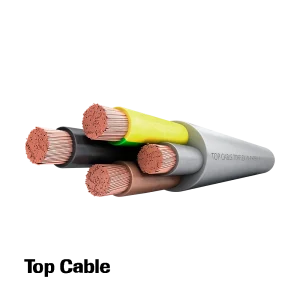
FIBER-OPTIC-CABLES
A trusted factory-direct supplier for all your FO cable needs Catalogue Download
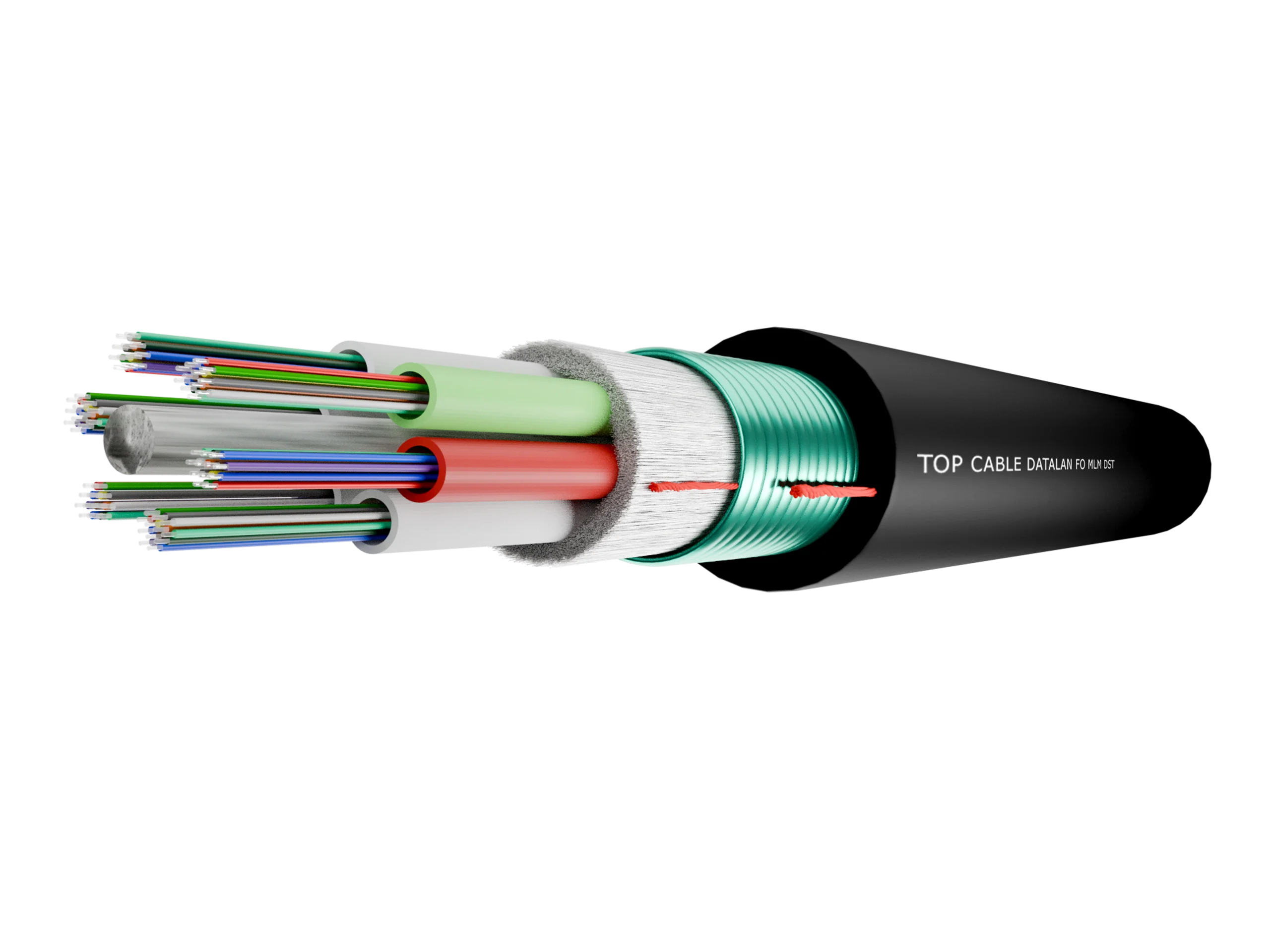
Benefits of fiber optic loose tube cables
DATALAN® loose tube FO cables is the best choice for industrial installations, as they are specifically designed for both indoor and outdoor environments. These lightweight fibre optic cables are highly flexible, offer enhanced mechanical durability, provide UV protection, are water-resistant, and are quick and easy to install.
Typical applications of FIBER OPTIC CABLES
Select...
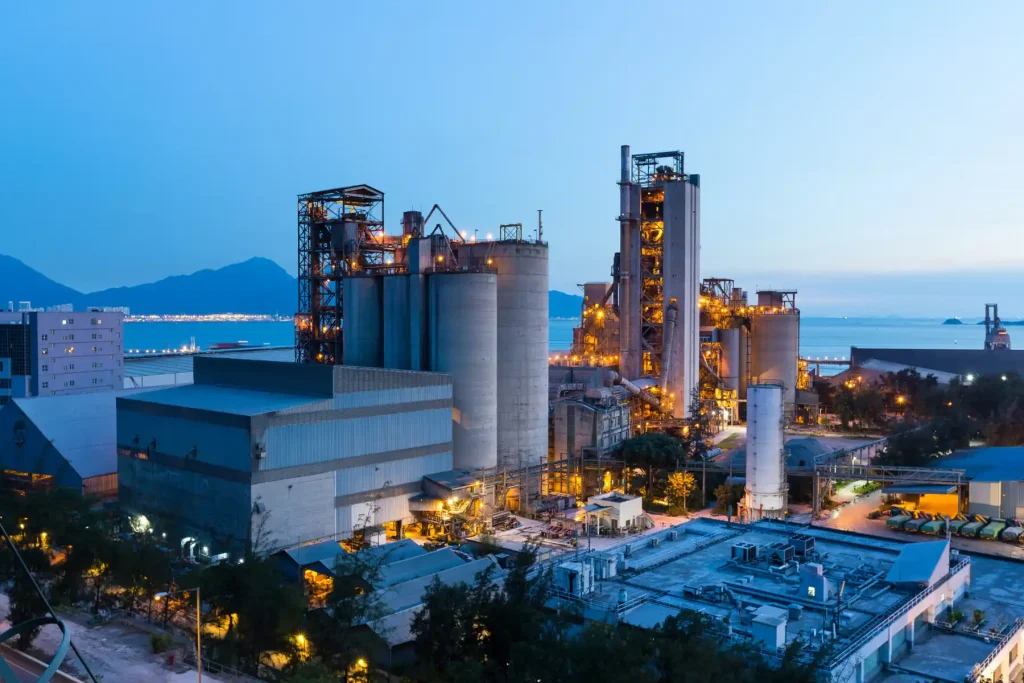
Fiber optic cables for industrial facilities
Fiber optic cables for industrial facilities demand robust mechanical protection, superior tensile strength, fire safety and weatherproof performance. Our cables ensure reliable data transmission with low attenuation, UV resistance, and waterproof properties—ideal for indoor and outdoor installations.

Fiber optic cables for long-distance FO networks
Fiber optic cables for long-distance networks require robust mechanical protection, superior tensile strength, fire safety and weatherproof performance. Our cables ensure reliable data transmission with low attenuation, UV resistance, and waterproof properties—ideal for indoor and outdoor installations in telecom and broadband infrastructure.
Industrial facilities
Fiber optic cables for industrial facilities demand robust mechanical protection, superior tensile strength, fire safety and weatherproof performance. Our cables ensure reliable data transmission with low attenuation, UV resistance, and waterproof properties—ideal for indoor and outdoor installations.
Long-distance fiber optic networks
Fiber optic cables for long-distance networks require robust mechanical protection, superior tensile strength, fire safety and weatherproof performance. Our cables ensure reliable data transmission with low attenuation, UV resistance, and waterproof properties—ideal for indoor and outdoor installations in telecom and broadband infrastructure.
A complete solution from Top Cable
-
High quality Cable manufacturer
Cable manufacturer Top Cable is one of Europe's leading cable manufacturers which excels in providing best-in-class service.
-
Large
cable stockLarge cable stock Our large cable stock is always ready to be shipped around the globe. -
Quality and
CertificatesQuality/Certificates In our state-of-the-art laboratories we subject our cables to stringent product testing and quality controls. -
Best-in-class-service
Best-in-class-service A friendly and eficcient sales team and our excellent logistics will satisfy your cable requirements.
Filter cable by:
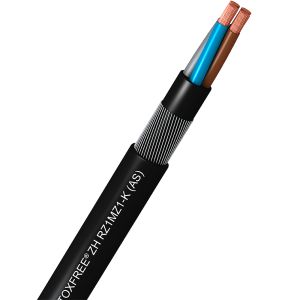
TOXFREE® LSZH RZ1MZ1-K
Enhanced Mechanical Protection / Enhanced Fire Safety | CPR Cca B2ca LSZH / For hazardous areas with explosive gas atmospheres (ATEX)
TOXFREE® LSZH RZ1 AL
Aluminium cable / Enhanced Fire Safety LSZH / CPR / Lighter Weight and Potentially Lower Cost (compared to Copper)
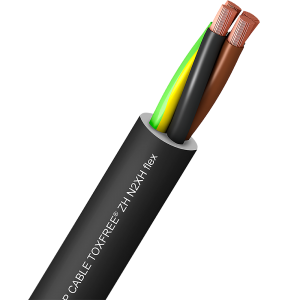
TOXFREE® LSZH N2XH flex
Enhanced Fire Safety | CPR Cca B2ca LSZH / Enhanced flexibility and ease of Installation / Versatile applications for fixed LSZH power installations
Why choose our DATALAN® FO loose tube cables?
-

Enhanced flexibility
-

Indoor & Outdoor installation
-

CPR compliant
-

Trusted Quality: cables from a recognized manufacturer
-

Technical expert support and after-sales service
-

Premium service and global logistics
FAQs (Frequently Asked Questions) about fiber optic cables
Long transmission distance: Fiber optic connections can be up to 70 km.
Fast transmission speeds: Fiber optic access is capable of providing high-speed bandwidth, like 100Mbps and 200Mbps.
low loss: Fiber optic medium is manufactured to extremely high purity, so fiber loss is extremely low. Therefore, it can reduce the number of relay stations in the communication line and greatly improve the quality of communication.
High resistance to interference: As plastic optical fiber is a non-metallic material, is immune to electromagnetic interference
Loose-tube fiber optic cables feature fibers that are placed inside a loose-fitting tube. This construction allows the fibers to move freely inside the tube, reducing the amount of stress on the fibers. This construction is typically for long-distance applications and allows the cable to withstand temperature changes and mechanical stress.
Loose-tube fiber optic cables are specifically designed for harsh outdoor environments. They protect the fibre core, cladding, and coating by enclosing everything within semi-rigid protective sleeves or tubes. Many loose-tube cables also have a water-resistant gel that surrounds the fibres, protecting them from moisture.
The difference between tight-buffered and loose-tube fiber optic cables is in the way the fibers are protected and packaged within the cable.
The choice between loose-tube fiber optic cables or tight-buffered depend on the application and the distance that the signal needs to travel, as well as the level of protection and flexibility required for the fibers.
Loose tube FO cables are more suitable for outdoor and long-distance applications. Tight-buffered cables are much more expensive than loose-tube cables, and hold less fibers versus loose-tube cables using a similar diameter due to the difference of the 900μm fiber and the 250μm fiber.
Indoor fiber optic cables have lower tensile strength and are more brittle. Nevertheless, they are also lighter and cheaper. This type of optical fiber is mainly used for the internal wiring of buildings and for the interconnection of network equipment..
The number of cores of the fiber optic cable is mainly related to the application system. Determining the number of fiber cores depends on how many fiber cores are used in the specific application, plus the number of redundant cores on the line.
Multimode fiber supports hundreds of transmission modes. This type of fiber has the advantage of high bandwidth and low cost.. It is suitable for transmission over short distances (less than 2000 metros).
Singlemode fiber can only transmit one mode of signal wave. Since the optical signal in single-mode fibers only travels in a straight line, the transmission bandwidth is very wide. Therefore, single-mode fibers are suitable for backbone communications systems, high capacity and long distance.
Singlemode fibers use a laser diode as a light source.. So, its price is slightly higher.
Currently, single-mode fibers are used more, while multimode fibers are being phased out.
An optical fiber, or optical fibre, is a flexible glass or plastic fiber that can transmit light from one end to the other. Such fibers find wide usage in fiber-optic communications, where they permit transmission over longer distances and at higher bandwidths (data transfer rates) than electrical cables. Fibers are used instead of metal wires because signals travel along them with less loss and are immune to electromagnetic interference.
A fiber optic cable is composed of the core, cladding, coating, strengthening fibers and cable jacket, with its core and cladding being the two main elements. The core is the light transmission area of the fiber. The cladding is the layer completely surrounding the core. Surrounding the cladding is usually another layer, called a coating.
Fiber optic cables transmit data with remarkable speed and efficiency. At the heart of these cables are thin, flexible strands of glass or plastic, known as optical fibers. These fibers are the conduits through which light signals travel, carrying vast amounts of data across great distances.
The magic behind fiber optic cables lies in the principle of total internal reflection. Light signals are modulated to carry data, and they travel through the fibers by means of this fundamental optical phenomenon. Total internal reflection occurs when light strikes the boundary between two materials with different refractive indices. In simpler terms, when light moves from a denser medium to a less dense one, it can be reflected back into the denser medium if the angle of incidence is greater than the critical angle.
• immunity to electromagnetic interference (EMI)
• exceptional speed and capacity
• they are lightweight and flexible, making them easy to install and handle
• enhanced security features: they are much harder to tap into
• Loose Tube Fiber Optic Cable.
• Outdoor/Indoor Fiber Optic Cable.
• Totally Gel-Free Cable
• Ribbon Cable.
• Rollable Ribbon Cable.
• Fiber Optic Drop Cable.
• Central Core Cable.
Proper installation of fiber optic cables involves careful planning, adherence to safety measures, the use of appropriate tools, and meticulous testing. By following these steps and documenting the process, you can ensure that your fiber optic network operates efficiently and reliably
Attenuation, or the loss of light signal as it travels through a fiber optic cable, is a critical factor in determining the quality and distance of data transmission. Understanding attenuation levels for different types of fiber optic cables is essential for optimizing network performance. The type of fiber, the material used, and the wavelength of light being transmitted all significantly impact the amount of attenuation.
Attenuation is measured in decibels per kilometer (dB/km) and is influenced by various factors, including the wavelength of the light being transmitted. Temperature fluctuations, mechanical stress, and the presence of contaminants can all impact the attenuation levels in fiber optic cables.
Environmental factors play a significant role in the performance and longevity of fiber optic cables. By taking proactive measures to mitigate the effects of temperature fluctuations, humidity, physical vibrations, and chemical exposure, network operators can ensure the long-term reliability and performance of their fiber optic infrastructure.
Questions? We’ll help you find a solution.
